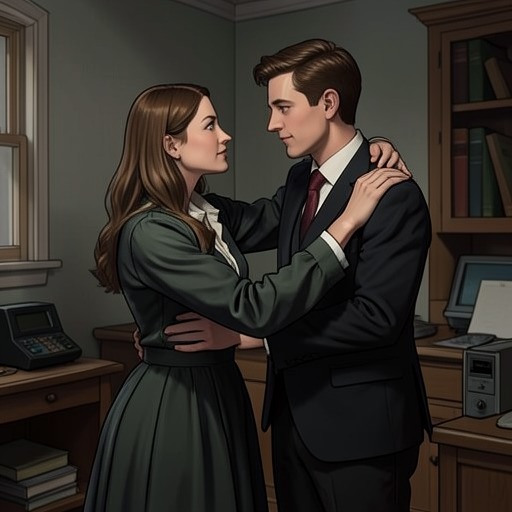
“The could-have-been boys still love you”
The Last Thing He Told Me“The could-have-been boys still love you” is Owen Michaels’s final, intimate remark to Hannah Hall when he leaves her and disappears into a crowd. Its significance lies in its affectionate, oblique acknowledgment of the lives and relationships that might have been—not in a promise that he will stay or return.
The Line as a Parting Gesture
Owen delivers the sentence while heading out the way he came. He is not looking at Hannah, and his voice is low; the line is set apart as something only he would say to her. Its wording makes it a distinctive farewell: rather than explain himself or offer a direct declaration about their relationship, he invokes the “could-have-been boys” and says they still love her.
The narration immediately breaks into two brief phrases: “The way you say hello.” and “The way you say goodbye.” Placed after Owen’s remark, they echo its concern with beginnings, endings, and what remains between them. The line is thus bound to the act of leaving, while also recalling the private language that marks Hannah and Owen’s connection.
Hannah’s Response
Hannah’s reaction is physical before it becomes verbal: her skin burns and her cheeks flare red. She says nothing. The moment offers no time for a reply; Owen shrugs, shifts his backpack higher on his shoulder, and walks away. Her silence leaves the remark unanswered rather than resolving what it means between them.
After Owen vanishes into the crowd, Hannah recasts him as just another design enthusiast on his way to another booth. Yet she does not dare watch him go or look in his direction. That contrast—his apparent return to the anonymity of the exhibition and her inability to face his departure—gives the brief exchange its emotional force.
Meaning and Narrative Function
The expression holds affection and loss together. “Could-have-been” points toward unrealized possibilities, while “still” gives those possibilities persistence: even what did not happen can remain emotionally present. The sentence does not identify the boys or explain the histories it invokes, so its intimacy depends on the shared understanding implied by Owen’s claim that only he would say it.
As a goodbye, the line is not a reconciliation or a promise. Owen leaves, and Hannah does not call after him. Instead, the remark becomes the last personal gesture in an encounter otherwise ending in disappearance into the crowd: a small, recognizable piece of their bond that she is left to carry without an answer.